
Translating Complexity into Strategic Action
Happy New Year 2017 - the year of the Red Fire Chicken.
Feliz Año Nuevo chino 2017 - el año del Gallo Rojo de Fuego.

source: heraldextra
The New Year of the fire rooster has been marked across the world on Saturday January 28th. Festive trappings are ubiquitous in China in the build-up to the lunar new year. Several countries in Asia celebrate the lunar new year in their own way. Dragon and lion dances in Chinatowns over the world have supported to make China’s the most famous. These days growing numbers of people who are not of Chinese descent are joining in.
Nevertheless, Chinese New Year is becoming a global holiday. The international festivity has been recently celebrated in cities such as Hanoi; Hong Kong; London, Madrid; Manila; Melbourne; New York; Taipei; etc. In Tokyo, window cleaners dressed up as the animals of the Chinese zodiac.
North America, Canada and New Zealand have issued commemorative stamps for the year of the chicken (or cock or rooster, as the animal of 2017 is sometimes called, inaccurately: the Chinese word is gender neutral). Last year New York city made the lunar new year a school holiday for the first time in new yorkers' cultural agenda.
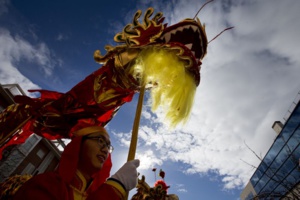
source: AP Photo/Paul White | People from the Chinese community celebrate the Lunar New Year, the year of the Rooster, in Madrid, Spain on 28.01.2017.
Celebrations vary depending on where they are held, but this year the lucky colors are gold, brown and yellow which are associated with the New Year’s animal – the rooster. The spread of the spring festival, as China calls it, is partly due to recent emigration from China: 9.5m Chinese people have moved abroad since the end of the 70s, many of them far richer than previous waves of migrants. It also reflects the wealth and globe-trotting ambitions of China’s current middle class: festivities in other countries are partly targeting the 6m Chinese who are expected to spend their week-long holiday abroad this year. International brands are trying to lure these big spenders with chicken-themed items.
Conscious of China’s growing economic and political clout, foreign leaders have taken to noting the occasion. It is rumored that this year’s World Economic Forum in Davos was held a week earlier than usual to avoid clashing with Chinese New Year. China hopes the festival will boost its cultural “soft power” abroad. Some Chinese Government’s Representatives share their discouragement as they experience the growing enthusiasm among Chinese for 'Western celebrations' such as Christmas—in December cities across China are bedecked with Santas and snowflake decorations. Chinese New Year is a welcome chance to 'reverse' the cultural flow. This New Year of the Rooster lasts until February 15th, 2018.
Conscious of China’s growing economic and political clout, foreign leaders have taken to noting the occasion. It is rumored that this year’s World Economic Forum in Davos was held a week earlier than usual to avoid clashing with Chinese New Year. China hopes the festival will boost its cultural “soft power” abroad. Some Chinese Government’s Representatives share their discouragement as they experience the growing enthusiasm among Chinese for 'Western celebrations' such as Christmas—in December cities across China are bedecked with Santas and snowflake decorations. Chinese New Year is a welcome chance to 'reverse' the cultural flow. This New Year of the Rooster lasts until February 15th, 2018.
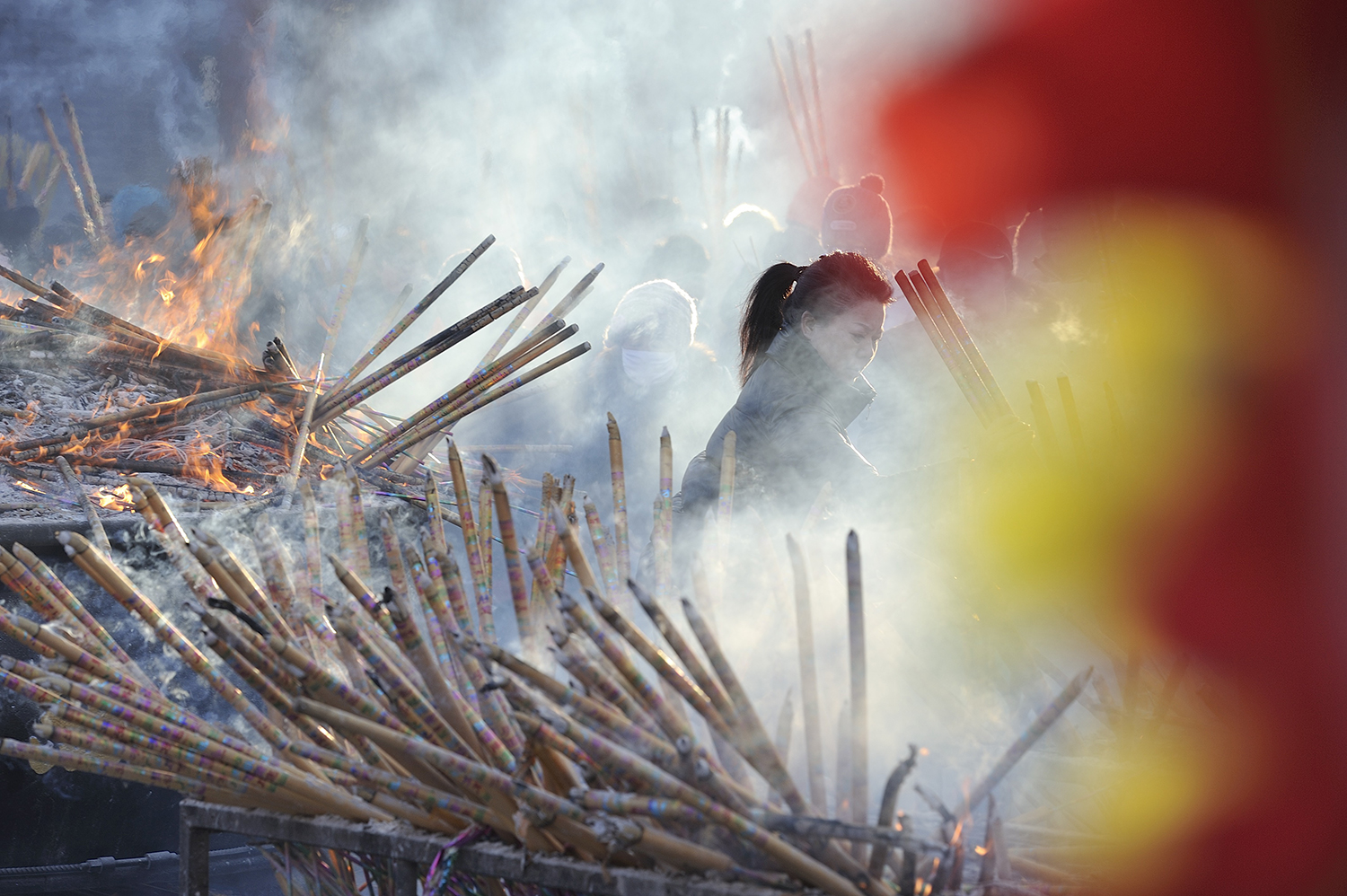
source: Tao Zhang/NurPhoto via Getty Images | Chinese worshippers light incense as they pray at the Dacheng Temple on Jan 28, 2017 in Qiqihar, China.
Tags :
Año Nuevo chino 2017 - el año del Gallo Rojo de Fuego
Chinese New Year 2017 - the Year of the Rooster
World Economic Forum 2017
Posted by Christopher O. DE ANDRES, on Saturday, January 28th 2017 at 19:25
|
Comments (0)
We must consider reasonable to confirm that ICC is Africa's 'most credible court of last resort', as expressed by Mr. Kofi ANNAN.
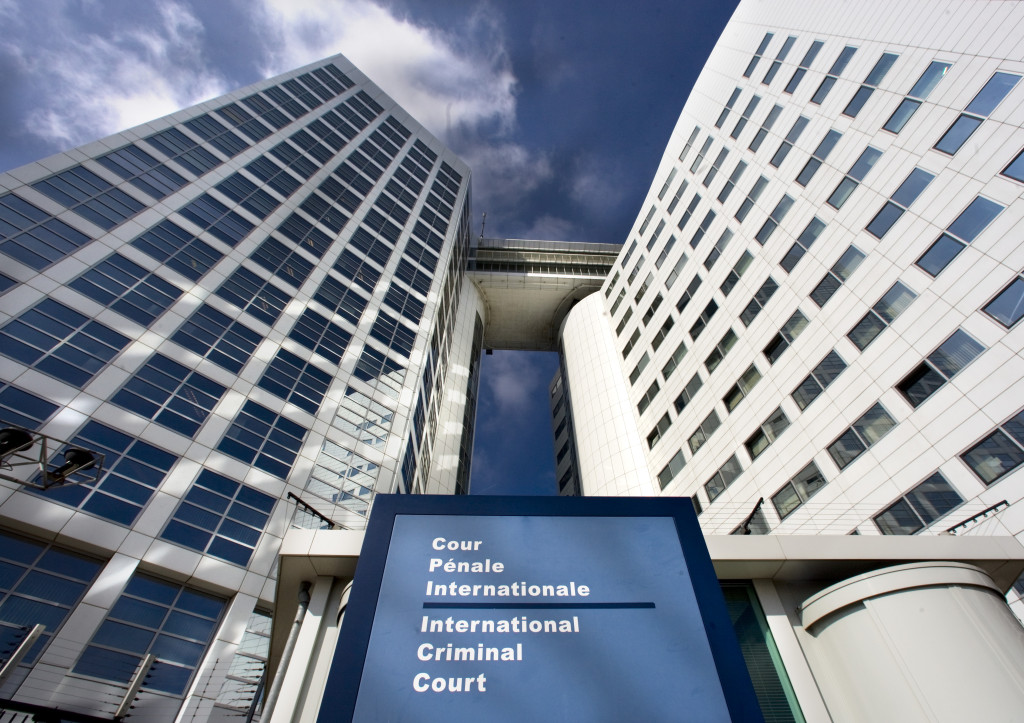
About the Court: The International Criminal Court (ICC) opened in July 2002, located in The Hague, is the Court of last resort for prosecution of genocide, war crimes, and crimes against humanity. It is the first legal body with permanent international jurisdiction to prosecute genocide, crimes against humanity and war crimes.
Its founding treaty, the Rome Statute, entered into force on July 1st, 2002. Over the last decade this Court has made significant headway in putting international justice on the map. Now, while the ICC is now responsible for international criminal accountability, its daunting mandate and world-wide reach have made its flaws more visible. The court and its member 124 State Parties to the Rome Statute face major challenges in meeting expanded expectations for the court across its current second phase - until 2020.
Its founding treaty, the Rome Statute, entered into force on July 1st, 2002. Over the last decade this Court has made significant headway in putting international justice on the map. Now, while the ICC is now responsible for international criminal accountability, its daunting mandate and world-wide reach have made its flaws more visible. The court and its member 124 State Parties to the Rome Statute face major challenges in meeting expanded expectations for the court across its current second phase - until 2020.
source: eurojust
Synopsis of the conflict: During the last few weeks six (6) African countries have complained that the International Criminal Court (ICC) is pursuing an aggressive and disruptive agenda in Africa, without proper priorities - particularly Burundi; Gambia; South Africa; Sudan; and Uganda – listed in alphabetical order. Kenya belongs to a separate scenario: it was the only case in Africa opened independently by the Court. But the ICC enjoyed the enthusiastic support of a majority of Kenyans. ‘They wanted justice for the 1,300 people killed and hundreds of thousands displaced in election-related violence’.
In this same critical framework, Burundian lawmaker said the ICC was “a political tool used by powers to remove whoever they want from power on the African continent.” The ICC had in April 2016 served notice that it would investigate outbreaks of violence in Burundi, which has been mired in a political crisis for more than a year. This position is echoed by the Gambia’s decision to quit the international institution and the government accuses the Court of targeting African leaders. On the part of South Africa, they said the Court’s summons were impeding their efforts at hosting peace talks. Simultaneously, in the short run ICC pressure on Sudan to hand over two alleged criminals has had no discernible impact, largely because relations between Khartoum and major Western governments have collapsed within the last months. However, we must keep in mind ICC prosecution represents one of the few credible threats to human rights violators in countries like Sudan, and can continue to be so if it secures convictions.
In the context of Uganda there is a conflict between the Ugandan government and the Lord’s Resistance Army, while ICC arrest warrants seems to have played a role in bringing both sides together for peace negotiations. Some criticisms outline the undermining of the Court’s legitimacy in the DRC and Uganda. In the DRC, where massive rights violations have occurred, a few arrests by the ICC of senior personnel carry mostly symbolic value. Nevertheless, the Court’s approach to selecting cases, follows the Rome Statute’s definition of complementarity, following a spirit of exclusively acting when States do not or cannot act for political, geopolitical or tactical reasons. In this same line of thought, the ICC got involved in these African cases because national authorities did not conduct solid investigations into the massive crimes that had occurred while the ICC does not supplant national jurisdictions, it only intervenes in cases where the country concerned is either unable or unwilling to try its own citizens. Africans deserve justice as much as anyone else, even if their governments cannot always provide it.
The fact that much of the ICC’s work has taken place in Africa highlights some of the controversial issues facing the Court, raising the question of whether international justice is evenly and fairly applied around the globe. The Court’s operations have expanded and deepened during this same period – new investigations, arrest warrants and preparations for trial all testify to any doubts. Current operations are translating the ICC’s ideals into reality and setting vital precedents for the Court’s future activities. Furthermore, we noted that contrary to claims in the context it was targeting Africa, the ICC had opened investigations in Georgia and was concluding preliminary probes in Afghanistan, Colombia, Irak, Palestine, and Ukraine.
Complementary, former United Nations Secretary General, Mr. Kofi ANNAN, has recently expressed that this Court is an institution that has and rightfully deserves the support of Africa because it "remains the continent’s most credible Court of last resort for the most serious crimes." In a recent article written for the UK-based publication ‘The Guardian,’ Mr. ANNAN, who is a strong advocate for the Court -opinion we share in this media platform by all means-, said despite its imperfections, the ICC had the support of the people of Africa, particularly the victims of war crimes and crimes against humanity.
‘‘Most of the continent’s democratic governments stand by the ICC. I stand by the ICC, because the most heinous crimes must not go unpunished,” he said.
Former United Nations Secretary General, Mr. Kofi ANNAN during a recent interview on this issue. Source: Mr. ALFA SHABAN, African News, 18.11.2016
Mr. ANNAN said as the continental bloc with the largest representation in the ICC – 34 State parties out of 124, Africa has benefitted and continues to leverage its human rights and legal status in the justice context meted out by the Court. Among others points to support his claim. Out of nine investigations on the African continent, eight were requested by African states themselves. Six African states referred their own situation to the ICC. African states voted in support of the UN Security Council referrals on Darfur and Libya. He, however, bemoaned some technical gaps of the Court, among others the fact that only two (France and the United Kingdom) out of the five Permanent Members of the UN Security Council, were signatories to the court.
This publication also agrees with Mr. ANNAN in the component of addressing the possible shortcomings while supporting the ICC’s efforts to rectify them, not to quit the Court; one of the most significant achievements of international society since the end of the cold war.
"Africa wants this court. Africa needs this court. Africa should continue to support this court. This is why I call on Africa’s democratic governments to take a principled stand in the near future at the Assembly of States Parties meeting in The Hague to shore up the ICC, a historic milestone on humanity’s journey towards international justice," concluded Mr. ANNAN.
note - some EU reputable publications mention another four (4) countries considering their relationship with ICC: Central African Republic; Cote d'Ivoire; Chad; and DR Congo. Kindly check El País (Spanish version, date 26.10.2016).
Posted by Editor in Chief: Mr. Christopher O. DE ANDRES, on Monday, November 21st 2016 at 07:15
|
Comments (0)
Category


Recent posts

Archives
#AIAct
#AIGovernance
#AITransparency
#ArtificialIntelligence
#EUFunding
#EuropeanUnion
#FinanciaciónDeLaInvestigación
#GestiónDeLaInvestigación
#HorizonEurope
#JustificaciónEconómica
#ResearchManagement
#ScienceCommunication
#StrategicCommunication
#Transferencia
EU projects
Financiación de la investigación
Gestión de la investigación
Grant management
Horizon Europe
Justificación económica
Proyectos europeos
Research management