');
document.write('
');
document.write(' ');
document.write('
');
document.write(' ');
document.write('
');
document.write(' ');
document.write('
');
document.write(' ');
document.write(' ');
document.write(' DE GARANTES Y ACOMPAÑANTES: ¿QUIÉN ES QUIÉN EN LOS DIÁLOGOS?');
document.write('
');
document.write(' ');
document.write('
');
document.write(' ');
document.write(' ');
document.write(' Noruega y Cuba intervendrán como garantes; Venezuela y Chile en calidad de acompañantes.
');
document.write('
');
document.write('
');
document.write(' ');
document.write(' ');
document.write(' Noruega y Cuba intervendrán como garantes; Venezuela y Chile en calidad de acompañantes.
');
document.write(' Comienzan en Oslo los diálogos de paz entre el Gobierno Santos y la guerrilla de las Fuerzas Armadas Revolucionarias de Colombia (FARC), como es sabido, con una presencia importante de la comunidad internacional, donde Noruega y Cuba intervendrán como garantes, y Venezuela y Chile en calidad de acompañantes. Resulta preciso hacer un ejercicio de pedagogía que revele quién es quién y qué se espera de cada uno en las negociaciones.');
document.write('
');
document.write(' ');
document.write('
'); document.write('
'); document.write('
'); document.write('
'); document.write('
'); document.write('
');
document.write(' ');
document.write(' ');
document.write('
');
document.write(' ');
document.write('
');
document.write(' ');
document.write('
');
document.write(' ');
document.write(' Primeramente, como es sabido, Noruega será el primer destino de las conversaciones y posteriormente Cuba será la sede permanente de las mismas. El país nórdico cuenta con una amplísima experiencia en materia de resolución de conflictos, con una veintena de participaciones en este tipo de procesos, como por ejemplo los de Israel y Palestina; Sri Lanka; Guatemala; Ruanda o Congo.
'); document.write('
'); document.write(' Asimismo, tuvo acto de presencia en el anterior proceso del Caguán, al igual que Cuba, que tiene una dilatada experiencia como facilitador en el conflicto interno colombiano, tanto con las FARC como con el ELN, y su posición al respecto siempre ha sido la de invocar la necesidad de una salida negociada al mismo.
'); document.write(' Cuba y Noruega contribuyen al proceso, primero como convocantes, asumiendo la responsabilidad de solicitar el inicio de los diálogos de paz, así como de darles continuidad. Lo normal es que como sedes sirvan a su vez como favorecedores del escenario físico donde deberán desarrollarse los diálogos, confiriendo así una mayor formalidad.'); document.write('
');
document.write(' '); document.write('
'); document.write(' Asimismo, tuvo acto de presencia en el anterior proceso del Caguán, al igual que Cuba, que tiene una dilatada experiencia como facilitador en el conflicto interno colombiano, tanto con las FARC como con el ELN, y su posición al respecto siempre ha sido la de invocar la necesidad de una salida negociada al mismo.
'); document.write(' Cuba y Noruega contribuyen al proceso, primero como convocantes, asumiendo la responsabilidad de solicitar el inicio de los diálogos de paz, así como de darles continuidad. Lo normal es que como sedes sirvan a su vez como favorecedores del escenario físico donde deberán desarrollarse los diálogos, confiriendo así una mayor formalidad.'); document.write('
'); document.write('
');
document.write('
');
document.write(' ');
document.write(' 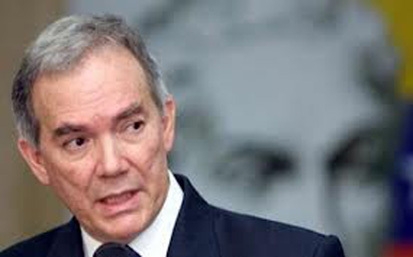 ');
document.write('
');
document.write('
');
document.write('');
document.write(' ');
document.write(' Roy Chaderton, Embajador venezolano ante la OEA, como acompañante');
document.write('
');
document.write(' ');
document.write('
');
document.write(' ');
document.write('
');
document.write(' ');
document.write(' Igualmente, Noruega y Cuba deben asumir la importancia de dos estrategias básicas: la estrategia de comunicación y la estrategia de formulación. Así, por un lado, en lo que tiene que ver con la comunicación, aparte de contactar con las partes, obtener su credibilidad para negociar y clarificar el contexto de la negociación, deberán estimular, si fuera necesario, el intercambio de información relevante que contribuya al entendimiento de las partes.
'); document.write('
'); document.write(' Por otro lado, en lo que respecta a la estrategia de comunicación, la responsabilidad de Noruega y Cuba pasa por elegir el ambiente de la reunión; favorecer un control del ritmo de las mismas; propiciar un ambiente físico idóneo; establecer el protocolo; asegurar la privacidad e, incluso, controlar el calendario; además de ayudar a mantener el proceso centrado en sus asuntos más relevantes.
'); document.write(' En adición, el hecho de que ambos países sean garantes del proceso de paz supone, de paso, conferir seguridad a los avances que se vayan sucediendo pues, en un caso como el colombiano, la ausencia de confianza entre las partes obliga a que un tercero testimonie los avances y compromisos que paulatinamente se vayan acordando.
'); document.write(' La función de Chile y de Venezuela, representados respectivamente por Milenko Skoknic, actual Jefe de Gabinete del Ministerio de Relaciones Exteriores, y Roy Chaderton, Embajador venezolano ante la OEA y exembajador en Colombia, es la de servir como acompañantes.
'); document.write(' '); document.write('
');
document.write(' '); document.write('
'); document.write(' Por otro lado, en lo que respecta a la estrategia de comunicación, la responsabilidad de Noruega y Cuba pasa por elegir el ambiente de la reunión; favorecer un control del ritmo de las mismas; propiciar un ambiente físico idóneo; establecer el protocolo; asegurar la privacidad e, incluso, controlar el calendario; además de ayudar a mantener el proceso centrado en sus asuntos más relevantes.
'); document.write(' En adición, el hecho de que ambos países sean garantes del proceso de paz supone, de paso, conferir seguridad a los avances que se vayan sucediendo pues, en un caso como el colombiano, la ausencia de confianza entre las partes obliga a que un tercero testimonie los avances y compromisos que paulatinamente se vayan acordando.
'); document.write(' La función de Chile y de Venezuela, representados respectivamente por Milenko Skoknic, actual Jefe de Gabinete del Ministerio de Relaciones Exteriores, y Roy Chaderton, Embajador venezolano ante la OEA y exembajador en Colombia, es la de servir como acompañantes.
'); document.write(' '); document.write('
'); document.write('
');
document.write('
');
document.write(' ');
document.write('
');
document.write(' ');
document.write('
');
document.write(' ');
document.write(' Su principal cometido tiene que ver con el de asumir lo que se conoce como “estrategias de manipulación”. Es decir, garantizar el mantenimiento de las partes en la mesa; velar por la responsabilidad de las concesiones; informar a las partes del costo del desacuerdo; proporcionar y filtrar información; presionar a las partes para que muestren flexibilidad, así como manejar, en la medida en que fuese necesario, cambios sobre las expectativas con el fin de permitir la discusión de los intereses comunes.
'); document.write('
'); document.write(' Su principal responsabilidad reposa en todo lo que concierne al entendimiento entre guerrilla y Gobierno y en la desactivación de posibles “puntos críticos”. De este modo, stricto sensu, ni los acompañantes ni los garantes asumirían funciones de mediación, al tratarse más bien de una labor de facilitación del entendimiento y de la comunicación en pos de propiciar escenarios de consenso.
'); document.write(' Sea como fuere, aunque la selección de los actores internacionales que van a estar presentes resulta una apuesta acertada y equilibrada para propiciar “puntos de encuentro”, conviene precisar que la técnica de resolución del conflicto escogida por guerrilla y Gobierno colombiano no ha sido la de la MEDIACIÓN, sino la de la NEGOCIACIÓN.'); document.write('
');
document.write(' '); document.write('
'); document.write(' Su principal responsabilidad reposa en todo lo que concierne al entendimiento entre guerrilla y Gobierno y en la desactivación de posibles “puntos críticos”. De este modo, stricto sensu, ni los acompañantes ni los garantes asumirían funciones de mediación, al tratarse más bien de una labor de facilitación del entendimiento y de la comunicación en pos de propiciar escenarios de consenso.
'); document.write(' Sea como fuere, aunque la selección de los actores internacionales que van a estar presentes resulta una apuesta acertada y equilibrada para propiciar “puntos de encuentro”, conviene precisar que la técnica de resolución del conflicto escogida por guerrilla y Gobierno colombiano no ha sido la de la MEDIACIÓN, sino la de la NEGOCIACIÓN.'); document.write('
'); document.write('
');
document.write('
');
document.write(' ');
document.write(' 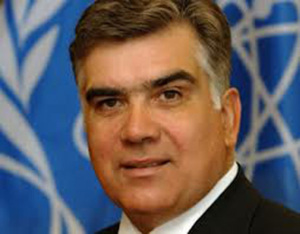 ');
document.write('
');
document.write('
');
document.write(' ');
document.write(' ');
document.write(' Milenko Skoknic, actual Jefe de Gabinete del Ministerio de Relaciones Exteriores Chileno');
document.write('
');
document.write(' ');
document.write('
');
document.write(' ');
document.write(' La mediación se entiende como un mecanismo de resolución pacífica de conflictos en el que el outsider interviniente lo hace bajo una estructura triangular, aceptada por las partes de mutuo acuerdo, dado su carácter neutral e imparcial —que, en principio, sólo Noruega representaría—, y que resulta de gran interés por su capacidad para facilitar la superación de escenarios difíciles y de estancamiento.
'); document.write('
'); document.write(' La fórmula de diálogo adoptada, con independencia de la asistencia y los posibles roles y funciones de los países señalados, se constituye dentro de una dimensión bilateral, donde los dos interlocutores son los actores involucrados y quienes llevarán el peso de la discusión, la elaboración de las propuestas, el intercambio cooperativo de concesiones y la identificación de los puntos satisfactorios dentro de los cinco pilares fundamentales; (*) desde los que se constituye el grueso de la agenda de negociación que, esperemos, sea la última y definitiva.
'); document.write(' '); document.write('
');
document.write(' '); document.write('
'); document.write(' La fórmula de diálogo adoptada, con independencia de la asistencia y los posibles roles y funciones de los países señalados, se constituye dentro de una dimensión bilateral, donde los dos interlocutores son los actores involucrados y quienes llevarán el peso de la discusión, la elaboración de las propuestas, el intercambio cooperativo de concesiones y la identificación de los puntos satisfactorios dentro de los cinco pilares fundamentales; (*) desde los que se constituye el grueso de la agenda de negociación que, esperemos, sea la última y definitiva.
'); document.write(' '); document.write('
'); document.write('
');
document.write('
');
document.write(' ');
document.write('
');
document.write(' ');
document.write('
');
document.write(' ');
document.write(' (*) La agenda de negociación se encuentra gravitando en torno a cinco puntos: (1) desarrollo agrario; (2) narcotráfico; (3) derechos de las víctimas; (4) integración en la vida política; (5) dejación de las armas.
'); document.write('
'); document.write('
'); document.write(' Escrito por | originally written by: Jerónimo Ríos Sierra | Especial para El Espectador (Bogotá, Colombia).
'); document.write('
'); document.write(' Editor en Jefe | Editor in Chief: ChOA.'); document.write('
');
document.write(' '); document.write('
'); document.write('
'); document.write(' Escrito por | originally written by: Jerónimo Ríos Sierra | Especial para El Espectador (Bogotá, Colombia).
'); document.write('
'); document.write(' Editor en Jefe | Editor in Chief: ChOA.'); document.write('
'); document.write('
');
document.write(' ');
document.write('
');
document.write(' ');
document.write(' Tags : ');
document.write(' el Gobierno Santos y las FARC ');
document.write(' estrategia de formulación ');
document.write(' estrategias de manipulación ');
document.write(' mediación ');
document.write(' Milenko Skoknic ');
document.write(' negociación ');
document.write(' Noruega y Cuba ');
document.write(' puntos críticos ');
document.write(' puntos de encuentro ');
document.write(' Roy Chaderton ');
document.write('
');
document.write(' ');
document.write(' ');
document.write(' Posted by Christopher Oscar de Andrés, on Monday, December 17th 2012 at 06:25');
document.write(' | ');
document.write(' ');
document.write(' Comments (0)');
document.write(' ');
document.write('
');
document.write(' ');
document.write('
');
document.write(' ');
document.write('
');
document.write(' ');
document.write('
');
document.write(' ');
document.write(' ');
document.write(' THE FUTURE OF EUROPEAN AUDIOVISUAL POLICY');
document.write('
');
document.write(' ');
document.write('
');
document.write(' ');
document.write(' ');
document.write(' A GLOBAL TOUR ACROSS THE EU LEGAL FRAMEWORK: FROM THE EARLY 90S TO THE TV / ONLINE / ON-DEMAND MODERN AUDIOVISUAL EUROPE
');
document.write('
');
document.write('
');
document.write(' ');
document.write(' ');
document.write(' A GLOBAL TOUR ACROSS THE EU LEGAL FRAMEWORK: FROM THE EARLY 90S TO THE TV / ONLINE / ON-DEMAND MODERN AUDIOVISUAL EUROPE
');
document.write('
');
document.write(' Several European organisms / institutions have been quite active in the development of international regulations related to TV broadcasting since the early 90s (mainly The Council of Europe, OSCE and the European Commission). The European Convention on Transfrontier Television, in force since 1993, provides an international framework for the circulation of television programme services among Member States. It set down rules for the protection of individual rights, such as the freedom of reception, the responsibility of broadcasters, or the content of programming, advertising, teleshopping and sponsorship.');
document.write('
');
document.write(' ');
document.write('
'); document.write('
'); document.write('
'); document.write('
'); document.write('
'); document.write('
'); document.write('
');
document.write(' ');
document.write(' ');
document.write('
');
document.write(' ');
document.write('  ');
document.write('
');
document.write('
');
document.write('');
document.write(' ');
document.write(' rights: spotify. Android terminal');
document.write('
');
document.write(' ');
document.write('
');
document.write(' ');
document.write('
');
document.write(' ');
document.write(' Audiovisual Europe has gone under vigorous and continuous change since 1989 when the Television Without Frontiers Directive (TWFD) defined the first core set of rules for television broadcasting in the European Union. Already then, satellite television did not stop at national borders. New opportunities for content delivery raised the question of how these services should be regulated in the near future... What rules should apply to videos available from the internet or to films that are supplied at the user\'s request (on-demand services)? Three technological innovations were most likely contributing favourably to the development of the audiovisual sector in Europe: high definition TV, flat panel display, and interactive television (e.g. movies on-demand without player controls and high interactivity in which, for example, an audience individual affects the programme being watched by applying a real-time voting on the screen). The Television Without Frontiers directive (TWFD) constitutes the cornerstone of the EU’s audiovisual policy. However, most EU Member States were concerned with the need of a thorough revision of the Directive which would take account of the technological developments and structural changes of the audiovisual market.
'); document.write('
'); document.write(' THE AUDIOVISUAL MEDIA SERVICE DIRECTIVE (AVMSD): INNOVATIVE RULES FOR OUR EVOLVING AUDIOVISUAL EUROPE
'); document.write('
'); document.write(' The Audiovisual Media Service Directive was created, amending / renaming the TWF Directive. Providing more flexibility within regulation vs. less detail. We would like to emphasize the fact that it modernizes TV advertising rules to better finance audiovisual content. The AVMS Directive entered into force on 19.12.2007 –and had to be transposed by Member States by the end of 2009. The Audiovisual Media Services Directive covers all EU audiovisual media services (including on-demand services) in the digital age, adapting EU rules to the evolving audiovisual environment. These days we can watch our favourite TV programme/s from all over Europe not just on TV, but also via the internet or on our advanced mobile smartphones’ screens. The rules laid down in the EU\'s Audiovisual Media Services Directive governs EU-wide coordination of national legislation on all audiovisual media, both traditional TV broadcasts (linear service/s) and on-demand services (non-linear service/s, e.g. on-demand films and news – Art. 1.1/a). Who decides when a specific programme is transmitted (a) and whether a schedule exists (b), makes distinction between the two approaches / services. Therefore, TV broadcasts are \'linear\' services because they follow a schedule arranged by the broadcaster, while on-demand (\'nonlinear\') services leave users to make a decision on when to watch a specific programme. It is true that while these services differ in how they are made available, they are both addressed to the general public. The Directive treats linear and on-demand services differently, taking into account the degree of user control over the service. On-demand services are thus subject to lighter regulation that matches the relative impact they have on society as a whole. Beyond this, the Directive upholds core societal values (e.g. Human Rights, Democracy and Rule of Law), from protecting minors / human rights (e.g. with access codes protecting children from adult content, art. 12) to ensuring accessible services for people with hearing or visual impairments (e.g. by subtitling and audio description, art. 7). Meanwhile, it comes to terms to the pivotal role that user choice and responsibility play in the new on-demand environment (e.g. transparency obligations for editorial decisions by which all audiovisual media service providers must indicate all relevant data needed to ensure that whoever makes the editorial decisions can be effectively liable, art. 5). '); document.write('
');
document.write(' '); document.write('
'); document.write(' THE AUDIOVISUAL MEDIA SERVICE DIRECTIVE (AVMSD): INNOVATIVE RULES FOR OUR EVOLVING AUDIOVISUAL EUROPE
'); document.write('
'); document.write(' The Audiovisual Media Service Directive was created, amending / renaming the TWF Directive. Providing more flexibility within regulation vs. less detail. We would like to emphasize the fact that it modernizes TV advertising rules to better finance audiovisual content. The AVMS Directive entered into force on 19.12.2007 –and had to be transposed by Member States by the end of 2009. The Audiovisual Media Services Directive covers all EU audiovisual media services (including on-demand services) in the digital age, adapting EU rules to the evolving audiovisual environment. These days we can watch our favourite TV programme/s from all over Europe not just on TV, but also via the internet or on our advanced mobile smartphones’ screens. The rules laid down in the EU\'s Audiovisual Media Services Directive governs EU-wide coordination of national legislation on all audiovisual media, both traditional TV broadcasts (linear service/s) and on-demand services (non-linear service/s, e.g. on-demand films and news – Art. 1.1/a). Who decides when a specific programme is transmitted (a) and whether a schedule exists (b), makes distinction between the two approaches / services. Therefore, TV broadcasts are \'linear\' services because they follow a schedule arranged by the broadcaster, while on-demand (\'nonlinear\') services leave users to make a decision on when to watch a specific programme. It is true that while these services differ in how they are made available, they are both addressed to the general public. The Directive treats linear and on-demand services differently, taking into account the degree of user control over the service. On-demand services are thus subject to lighter regulation that matches the relative impact they have on society as a whole. Beyond this, the Directive upholds core societal values (e.g. Human Rights, Democracy and Rule of Law), from protecting minors / human rights (e.g. with access codes protecting children from adult content, art. 12) to ensuring accessible services for people with hearing or visual impairments (e.g. by subtitling and audio description, art. 7). Meanwhile, it comes to terms to the pivotal role that user choice and responsibility play in the new on-demand environment (e.g. transparency obligations for editorial decisions by which all audiovisual media service providers must indicate all relevant data needed to ensure that whoever makes the editorial decisions can be effectively liable, art. 5). '); document.write('
'); document.write('
');
document.write('
');
document.write(' ');
document.write('  ');
document.write('
');
document.write('
');
document.write('');
document.write(' ');
document.write(' rights: bigstock');
document.write('
');
document.write(' ');
document.write('
');
document.write(' ');
document.write('
');
document.write(' ');
document.write(' A SET OF CLEAR RULES BEFORE A STRAIGHTFORWARD BASIS
'); document.write('
'); document.write(' "To support the development of new business opportunities without jeopardizing important public interests such as the protection of minors and human dignity, the rules for audiovisual media services have to be as concise as necessary and as flexible as possible".
'); document.write(' – EU Commission, Information Society and Media. OCT 2008.
'); document.write('
'); document.write(' The development and uptake of new and innovative services rely on the upholding of rules for stable and predictable business environment. Knowing this set of rules and who must enforce it, therefore, is a special concern for service providers and users alike. Since users possess different degree/s of choice and control over on-demand audiovisual media services, a basic tier of rules apply to them. Although it is necessary to be stricter on the legal framework to address advertising and protecting human dignity and children.
'); document.write('
'); document.write(' When it comes to jurisdiction for satellite broadcaster, the AVMSD reverses the criteria defining jurisdiction under the old rules: when a broadcaster based outside the EU uses a satellite up-link in a EU country, the country of origin will have plain jurisdiction. Solely when there is no up-link within the EU, does the EU country whose satellite capacity is used gain jurisdiction. The key question which arises at this time is which country’s rules apply then? Under the new rules, EU countries can restrict the retransmission of unsuitable on-demand audiovisual content –e.g. neo-Nazi propaganda- which may not be banned in its country of origin, (art. 2).
'); document.write('
'); document.write(' NEW CHALLENGES EVENTUALLY ARISING. CONSUMER PROTECTION AND ADVERTISING RULES
'); document.write('
'); document.write(' In this context, relevant new challenges are also addressed, such as the potentially unhealthy foodstuff (‘fatty foods’) through calls for industry self-regulation or even combined with local government regulation (co-regulation, art. 4.7). However, private correspondence falls outside the scope of the Directive, as do services that do not primarily seek to distribute audiovisual content, such as the electronic versions of newspapers and magazines. As on-demand services become increasingly popular, it is important to protect a reasonable economic foundation for all audiovisual media service providers and the AV stakeholder community. The Directive updates the rules on television advertising across the new audiovisual environment. As an outcome, users now benefit from general requirements that make advertising and commercial messages readily recognizable, protect human dignity, and abstain from using surreptitious / subliminal techniques. The new rules have a broad definition of what constitutes advertising; including sponsorship, product placement (it refers to products in film scenes or as part of certain audiovisual programmes), and / or teleshopping. Programme sponsorship has to abide by the same rules in all audiovisual media services (art. 1.1.h). This enhances that all forms of commercial audiovisual content are covered by a common set of rules, whatever mode of delivery is used for the programmes to which they are associated. The existing ban on tobacco advertising is extended to on-demand services. The same applies to the portrayal of alcohol thus giving special consideration to the protection of minors. Furthermore, in our view, products / programmes / brands / symbols which encourage teenage anorexia, bulimia, binge eating and all kinds of eating distress should be banned as well. Broadcasters enjoy more flexibility as regards the insertion of spot advertising and sponsorship comprising the established hourly limit of 12 minutes for advertising / teleshopping spots. In this manner, all service providers can best exploit the enormous potential of EU audiovisual commercial communications, while a high standard of consumer protection is ensured.'); document.write('
');
document.write(' '); document.write('
'); document.write(' "To support the development of new business opportunities without jeopardizing important public interests such as the protection of minors and human dignity, the rules for audiovisual media services have to be as concise as necessary and as flexible as possible".
'); document.write(' – EU Commission, Information Society and Media. OCT 2008.
'); document.write('
'); document.write(' The development and uptake of new and innovative services rely on the upholding of rules for stable and predictable business environment. Knowing this set of rules and who must enforce it, therefore, is a special concern for service providers and users alike. Since users possess different degree/s of choice and control over on-demand audiovisual media services, a basic tier of rules apply to them. Although it is necessary to be stricter on the legal framework to address advertising and protecting human dignity and children.
'); document.write('
'); document.write(' When it comes to jurisdiction for satellite broadcaster, the AVMSD reverses the criteria defining jurisdiction under the old rules: when a broadcaster based outside the EU uses a satellite up-link in a EU country, the country of origin will have plain jurisdiction. Solely when there is no up-link within the EU, does the EU country whose satellite capacity is used gain jurisdiction. The key question which arises at this time is which country’s rules apply then? Under the new rules, EU countries can restrict the retransmission of unsuitable on-demand audiovisual content –e.g. neo-Nazi propaganda- which may not be banned in its country of origin, (art. 2).
'); document.write('
'); document.write(' NEW CHALLENGES EVENTUALLY ARISING. CONSUMER PROTECTION AND ADVERTISING RULES
'); document.write('
'); document.write(' In this context, relevant new challenges are also addressed, such as the potentially unhealthy foodstuff (‘fatty foods’) through calls for industry self-regulation or even combined with local government regulation (co-regulation, art. 4.7). However, private correspondence falls outside the scope of the Directive, as do services that do not primarily seek to distribute audiovisual content, such as the electronic versions of newspapers and magazines. As on-demand services become increasingly popular, it is important to protect a reasonable economic foundation for all audiovisual media service providers and the AV stakeholder community. The Directive updates the rules on television advertising across the new audiovisual environment. As an outcome, users now benefit from general requirements that make advertising and commercial messages readily recognizable, protect human dignity, and abstain from using surreptitious / subliminal techniques. The new rules have a broad definition of what constitutes advertising; including sponsorship, product placement (it refers to products in film scenes or as part of certain audiovisual programmes), and / or teleshopping. Programme sponsorship has to abide by the same rules in all audiovisual media services (art. 1.1.h). This enhances that all forms of commercial audiovisual content are covered by a common set of rules, whatever mode of delivery is used for the programmes to which they are associated. The existing ban on tobacco advertising is extended to on-demand services. The same applies to the portrayal of alcohol thus giving special consideration to the protection of minors. Furthermore, in our view, products / programmes / brands / symbols which encourage teenage anorexia, bulimia, binge eating and all kinds of eating distress should be banned as well. Broadcasters enjoy more flexibility as regards the insertion of spot advertising and sponsorship comprising the established hourly limit of 12 minutes for advertising / teleshopping spots. In this manner, all service providers can best exploit the enormous potential of EU audiovisual commercial communications, while a high standard of consumer protection is ensured.'); document.write('
'); document.write('
');
document.write('
');
document.write(' ');
document.write('  ');
document.write('
');
document.write('
');
document.write(' ');
document.write(' ');
document.write(' Cannes Festival 2012 | 65 Anniversary');
document.write('
');
document.write(' ');
document.write('
');
document.write(' ');
document.write(' FIRST THINGS FIRST!: COMPETITION COEXISTING WITH PROMOTION OF EUROPEAN PRODUCTIONS
'); document.write('
'); document.write(' Competition plays a vital role in the media sector. The rules within the competition arena are designed to prevent illegal restrictions (e.g. price-fixing agreements or cartels between competitors) avoiding international market’s distortions. Antitrust law aims at eliminating agreements which restrict competition and the abuse of a dominant position on the market. The latter agreements and practices reduce the quality and diversity of content. Merger control ensures that no excessive concentrations are created which could be detrimental to effective competition, thus ensuring cultural diversity while taking into account, simultaneously, the need to have European media companies of a sufficient size to compete at a global level –to reach a balance between the both is not an easy task. In practice, horizontal and vertical concentration in the media industry, particularly in the pay TV sector, and the consolidation of satellite platforms, led the EU Commission to examine a number of complex and high profile cases. Finally, the application of State Aid rules focuses on the effects on competition of aid granted by Member States and ensures that such measures do not distort competition in the Common Market. In this respect, the European Commission and the Council of Europe have taken initiatives in the field of public service broadcasting and cinema (State aid to cinema and TV productions, e.g. The MEDIA 2007 programme 2007-2013.
'); document.write('
'); document.write(' European Member States must ensure that not only TV broadcasters but also on-demand audiovisual media services promote European AV industry. Eurimages – European Cinema Support Fund is a bright example of this (the Council of Europe fund for the co-production, distribution and exhibition of European cinematographic works, aiming to promote the European film industry by encouraging the production / distribution of films and fostering co-operation between professionals.'); document.write('
');
document.write(' '); document.write('
'); document.write(' Competition plays a vital role in the media sector. The rules within the competition arena are designed to prevent illegal restrictions (e.g. price-fixing agreements or cartels between competitors) avoiding international market’s distortions. Antitrust law aims at eliminating agreements which restrict competition and the abuse of a dominant position on the market. The latter agreements and practices reduce the quality and diversity of content. Merger control ensures that no excessive concentrations are created which could be detrimental to effective competition, thus ensuring cultural diversity while taking into account, simultaneously, the need to have European media companies of a sufficient size to compete at a global level –to reach a balance between the both is not an easy task. In practice, horizontal and vertical concentration in the media industry, particularly in the pay TV sector, and the consolidation of satellite platforms, led the EU Commission to examine a number of complex and high profile cases. Finally, the application of State Aid rules focuses on the effects on competition of aid granted by Member States and ensures that such measures do not distort competition in the Common Market. In this respect, the European Commission and the Council of Europe have taken initiatives in the field of public service broadcasting and cinema (State aid to cinema and TV productions, e.g. The MEDIA 2007 programme 2007-2013.
'); document.write('
'); document.write(' European Member States must ensure that not only TV broadcasters but also on-demand audiovisual media services promote European AV industry. Eurimages – European Cinema Support Fund is a bright example of this (the Council of Europe fund for the co-production, distribution and exhibition of European cinematographic works, aiming to promote the European film industry by encouraging the production / distribution of films and fostering co-operation between professionals.'); document.write('
'); document.write('
');
document.write('
');
document.write(' ');
document.write('  ');
document.write('
');
document.write('
');
document.write(' ');
document.write(' ');
document.write('
');
document.write(' ');
document.write(' MEDIA PLURALISM AND FREEDOM OF EXPRESSION. A BASELINE ANALYSIS
'); document.write('
'); document.write(' "Everyone has the right to freedom of expression", including the freedom to hold opinions and to receive and impart information and ideas without interference by public authority and regardless of frontiers".
'); document.write(' – Article 10 of the European Convention on Human Rights (echr).
'); document.write('
'); document.write(' The EU’s commitment to respect freedom and pluralism of media while enhancing the right to information and freedom of expression is enshrined in article 11 of the European Union Charter of Fundamental Rights as well as article 10 of the European Convention for the Protection of Human Rights and Fundamental Freedoms. Measures to guarantee media pluralism typically limit maximum holdings in media companies and prevent cumulative control or participation in a few media companies per State Member at the same time. The final aim is to safeguard that the media reflect a spectrum of views and opinions. The Commission\'s Green Paper on services of general interest of May 2003 noted that protection of media pluralism is primarily a task for the Member States. A number of Community law instruments contribute directly / indirectly to the aim of preserving media pluralism (in particular through its provisions on the promotion of European productions, and of works by independent producers). In a related move, the Commission initiated a Centre for Media Pluralism and Media Freedom within the Schuman School of the European University Institute to reflect and advise on the underlying issues. The institute\'s long-term mission is to support the process of European integration and it has accumulated unrivalled expertise in the area of European governance. Governments may be tempted to control the media, in particular state-owned TV / radio stations, as a means of influencing public opinion. This is often, but not only the case, in times of crisis (e.g. during wars and terrorist attacks). Attempts to control of the media can take different forms, such as by the threat of the media being closed down, by censorship, and self-censorship when this is the only way to continue operating.
'); document.write('
'); document.write(' Journalists are subjected to police harassment, unjustified imprisonment and even killing... Another threat is that concentration has put major media in the hands of a few strong multimedia groups, reducing the diversity of information sources. With democracy, the rule of law and human rights being the common values of European Member States, freedom of expression and information are generally respected in most countries. However, recently both the Council of Europe’s Parliamentary Assembly and the Secretary General have expressed concern about the situation in Member States such as Armenia, Azerbaijan, Moldova and Russia where, despite democratic progress in many fields, rules on freedom of the press are not always respected. Several Western Balkan governments are tempted on a regular basis to control media (1). The case law of the OSCE Mission in Kosovo shows that there is room for improvement while monitoring / lobbying for Radio Television of Kosovo (RTK) financial and editorial independence. The Mission assists the Independent Media Commission (IMC) in drafting regulations in line with the EU audiovisual media service directive and an optimum strategy for media digitalization.'); document.write('
');
document.write(' '); document.write('
'); document.write(' "Everyone has the right to freedom of expression", including the freedom to hold opinions and to receive and impart information and ideas without interference by public authority and regardless of frontiers".
'); document.write(' – Article 10 of the European Convention on Human Rights (echr).
'); document.write('
'); document.write(' The EU’s commitment to respect freedom and pluralism of media while enhancing the right to information and freedom of expression is enshrined in article 11 of the European Union Charter of Fundamental Rights as well as article 10 of the European Convention for the Protection of Human Rights and Fundamental Freedoms. Measures to guarantee media pluralism typically limit maximum holdings in media companies and prevent cumulative control or participation in a few media companies per State Member at the same time. The final aim is to safeguard that the media reflect a spectrum of views and opinions. The Commission\'s Green Paper on services of general interest of May 2003 noted that protection of media pluralism is primarily a task for the Member States. A number of Community law instruments contribute directly / indirectly to the aim of preserving media pluralism (in particular through its provisions on the promotion of European productions, and of works by independent producers). In a related move, the Commission initiated a Centre for Media Pluralism and Media Freedom within the Schuman School of the European University Institute to reflect and advise on the underlying issues. The institute\'s long-term mission is to support the process of European integration and it has accumulated unrivalled expertise in the area of European governance. Governments may be tempted to control the media, in particular state-owned TV / radio stations, as a means of influencing public opinion. This is often, but not only the case, in times of crisis (e.g. during wars and terrorist attacks). Attempts to control of the media can take different forms, such as by the threat of the media being closed down, by censorship, and self-censorship when this is the only way to continue operating.
'); document.write('
'); document.write(' Journalists are subjected to police harassment, unjustified imprisonment and even killing... Another threat is that concentration has put major media in the hands of a few strong multimedia groups, reducing the diversity of information sources. With democracy, the rule of law and human rights being the common values of European Member States, freedom of expression and information are generally respected in most countries. However, recently both the Council of Europe’s Parliamentary Assembly and the Secretary General have expressed concern about the situation in Member States such as Armenia, Azerbaijan, Moldova and Russia where, despite democratic progress in many fields, rules on freedom of the press are not always respected. Several Western Balkan governments are tempted on a regular basis to control media (1). The case law of the OSCE Mission in Kosovo shows that there is room for improvement while monitoring / lobbying for Radio Television of Kosovo (RTK) financial and editorial independence. The Mission assists the Independent Media Commission (IMC) in drafting regulations in line with the EU audiovisual media service directive and an optimum strategy for media digitalization.'); document.write('
'); document.write('
');
document.write('
');
document.write('');
document.write('
');
document.write(' ');
document.write('
');
document.write(' ');
document.write(' THE INTERNET AS A CHANGING COURSE OF ACTION WITH REGARD TO THE PROTECTION OF FREEDOM OF EXPRESSION AND INFORMATION
'); document.write('
'); document.write(' The internet has become a major means of communication which has acted as a catalyst for freedom of expression and information. The current European legislation comprises a set of principles (e.g. the European Convention on Human Rights applying to the global web) which implies that no control or restriction should be set on the access to information on the internet, though measures should be put in place for protecting children and other vulnerable groups. In this new environment, the Council of Europe’s Committee of Ministers also defends self-regulation and the anonymity of users. In order to address challenges to freedom of expression on the internet, the Council of Europe adopted the Convention on Cybercrime, the first international treaty on criminal offences through the internet, and a specific protocol on racist and xenophobic content. The European Convention on Human Rights protects each individual from the abuses by the State. In the internet and mobile age, governments, rule makers and private sector must cross some fundamental bridges to reach key agreements in order to make sure that users are protected from degrading conditions by the European state / non state actors while playing the fluctuating cyberspace rules of the game.
'); document.write(' '); document.write('
');
document.write(' '); document.write('
'); document.write(' The internet has become a major means of communication which has acted as a catalyst for freedom of expression and information. The current European legislation comprises a set of principles (e.g. the European Convention on Human Rights applying to the global web) which implies that no control or restriction should be set on the access to information on the internet, though measures should be put in place for protecting children and other vulnerable groups. In this new environment, the Council of Europe’s Committee of Ministers also defends self-regulation and the anonymity of users. In order to address challenges to freedom of expression on the internet, the Council of Europe adopted the Convention on Cybercrime, the first international treaty on criminal offences through the internet, and a specific protocol on racist and xenophobic content. The European Convention on Human Rights protects each individual from the abuses by the State. In the internet and mobile age, governments, rule makers and private sector must cross some fundamental bridges to reach key agreements in order to make sure that users are protected from degrading conditions by the European state / non state actors while playing the fluctuating cyberspace rules of the game.
'); document.write(' '); document.write('
');
document.write('  ');
document.write('
');
document.write('
');
document.write('');
document.write(' ');
document.write(' social media and cybercrime actions | rights: seifenblase');
document.write('
');
document.write(' '); document.write('
');
document.write('
');
document.write(' ');
document.write('
');
document.write(' ');
document.write('
');
document.write(' ');
document.write(' (1) It is important to keep in mind that Albania, Bosnia and Herzegovina, Montenegro and Serbia as well Kosovo under UN Security Council Resolution 1244/99 are potential candidates to join EU membership once they are ready.');
document.write('
');
document.write(' '); document.write('
');
document.write(' ');
document.write('
');
document.write(' ');
document.write(' Tags : ');
document.write(' advertising / teleshopping spots ');
document.write(' Centre for Media Pluralism and Media Freedom ');
document.write(' Eurimages – European Cinema Support Fund ');
document.write(' European Convention for the Protection of Human Rights and Fundamental Freedom ');
document.write(' European Union Charter of Fundamental Rights ');
document.write(' linear service/s ');
document.write(' MEDIA PLURALISM AND FREEDOM OF EXPRESSION ');
document.write(' mobile smartphones ');
document.write(' on-demand services ');
document.write(' OSCE Mission in Kosovo ');
document.write(' Radio Television of Kosovo (RTK) ');
document.write(' Television Without Frontiers Directive (TWFD) ');
document.write(' The Audiovisual Media Service Directive (AVMSD) ');
document.write(' the Convention on Cybercrime ');
document.write(' the Council of Europe ');
document.write(' the European Convention on Human Rights ');
document.write(' The European Convention on Transfrontier Television ');
document.write(' the Independent Media Commission (IMC) ');
document.write(' The MEDIA 2007 programme 2007-2013 ');
document.write(' the Schuman School of the European University Institute ');
document.write('
');
document.write(' ');
document.write(' ');
document.write(' Posted by Christopher Oscar de Andrés, on Tuesday, November 13th 2012 at 07:30');
document.write(' | ');
document.write(' ');
document.write(' Comments (2)');
document.write(' ');
document.write('
');
document.write(' ');
document.write(' 1');
document.write(' ...');
document.write(' «');
document.write(' 36');
document.write(' 37');
document.write(' 38');
document.write(' 39');
document.write(' 40');
document.write(' 41');
document.write(' 42');
document.write(' »');
document.write(' ...');
document.write(' 46');
document.write('
');
document.write('